


This post is an annotated republishing of a column from the eleventh edition of Dig It! – a newsletter about cultural heritage in the digital landscape.
In their dispatch #11 The light at the end of the tunnel?, Medhavi Gandhi and Larissa Borck are discussing what role the digital will have in the post-pandemic GLAM world* (GLAM is a collective term for institutions that are Galleries, Libraries, Archives and Museums). The guest chronicle is followed by an afterword that places the chronicle in the context of Brunnsmuseet and Open Sources initiative.
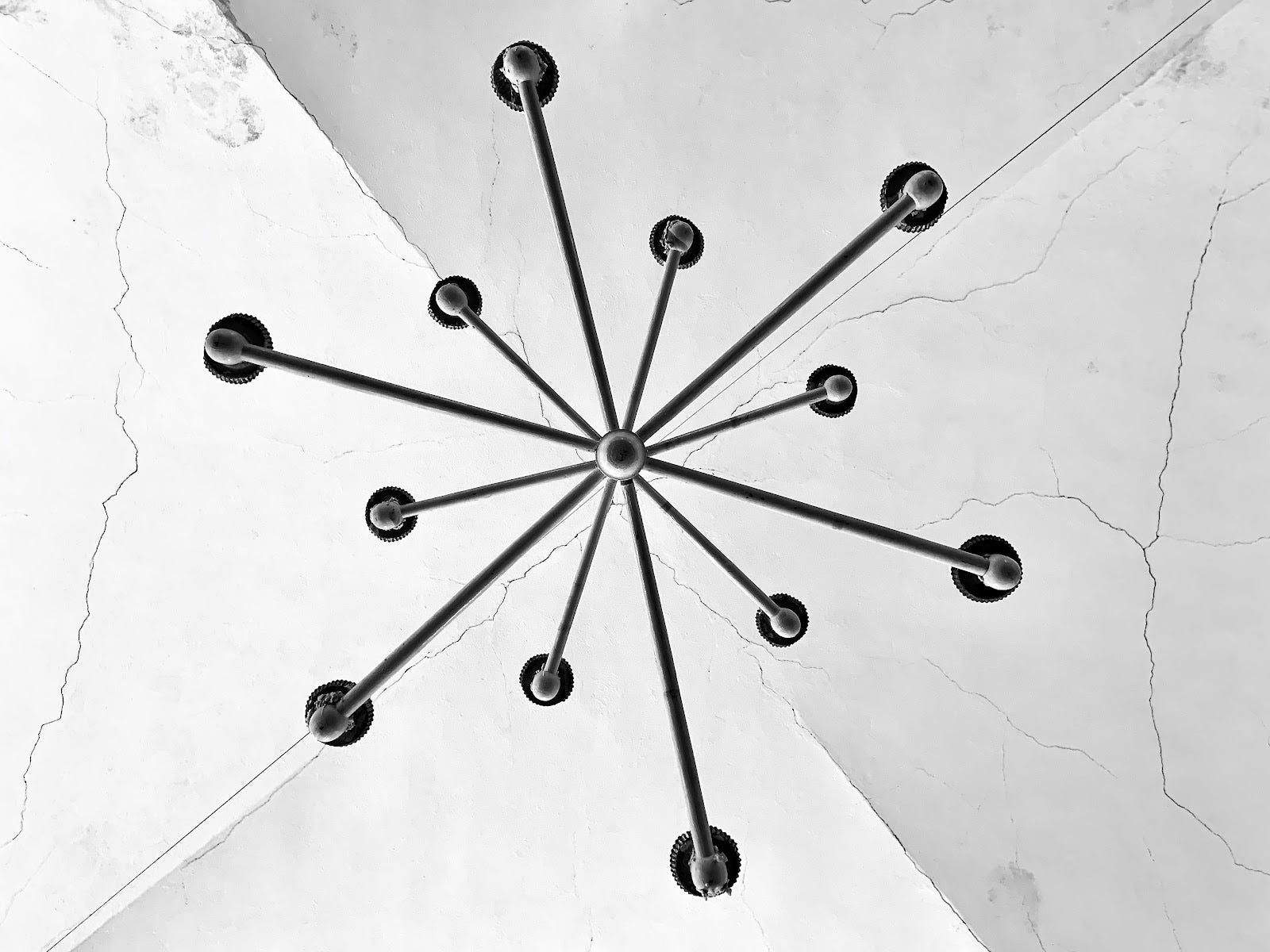
Chandelier in the middle of Sätra Brunn's church, photographed by article author Larissa Borck, CC BY. The image can be downloaded from Wikimedia Commons.

In our parts of the world, societies and politicians are discussing “roads to recovery” and when we’ll finally be returning to some kind of new normal. The pandemic has been going on for more than a year now and it has reshaped what digital practice looks like in so many GLAM institutions across the world. At the same time, it sometimes feels like that the changes are sometimes only superficial and that some are longing to go back to “the physical visitor is king*queen”.
Medhavi: – It is no secret that during the first months of the pandemic, digital media use increased exponentially as people stayed home, and shifted their lives online. For many GLAMs, this period also marked their digital debut. From educational sessions to virtual tours and social media activity - there have been many diverse, new experiences (as well as Zoom-fatigue!) that audiences were exposed to, and surely, some of these are here to stay as places begin to welcome visitors. What I cannot miss mentioning here is how promptly several GLAMs responded to the situation as remote working became the norm almost overnight.
However, I was recently speaking with a colleague from a small-sized, but important museum in India that has really boosted their social media efforts in the last year. I realized that the management recognized these efforts as the extent of their digital transformation. I, therefore, wondered if other GLAMs, too, were positioning their digital efforts towards a similar direction. As GLAMs begin to open their doors to the public again, what will their digital priorities be like?
Larissa: – I feel like there are a couple of things to unpack, and one of them is how the cultural heritage and arts sector wants to envision themselves in the future, how they want to set their priorities, and how they perceive themselves in competition to other sectors when trying to attract audiences and qualified workers.
Essentially, in my view, the question is about the social role of GLAMs and how they prioritize their audiences. What kind of profile do they want to build, how do they want to balance their physical, seemingly more traditional role with diverse offers to their communities? I still get questions around if digital activities want to replace the object, the original. As long as GLAMs see digital and physical practice as two different aspects of their activities instead of focusing on the different audiences they could serve with both as a spectrum of tools, their struggle to find their role and relevance in nowadays societies will only increase.
One of my main concerns right now is how the skills divide that has become more apparent during the pandemic is going to increase the gap between the stars in the sector from regional and small museums. When I look into conference programs right now, I see the big players getting all the attention for their work, the internationally renowned institutions with a lot of money in their pockets. And yes, of course, we need to see the trailblazers and get inspired by them. But I also want to see (because I know that they exist) the volunteer-led museums and how they come up with creative digital ideas that are sometimes so much more audience-centered and mission-driven.
And then there is the need for GLAMs to hire skilled staff if they really want to go on and invest in digital, whether that means digital access to collections, social media, or digital experiences. And create the positions that actually allow people to sustain a living, not only for the time of a few months. I am increasingly alarmed that museums in Germany for example seem to try to staff digital roles with the candidates they can pay as little money as possible, especially in trainee positions. There are great hopes and expectations on the one hand, and low appreciation, systemic issues, and precarious employment on the other hand.
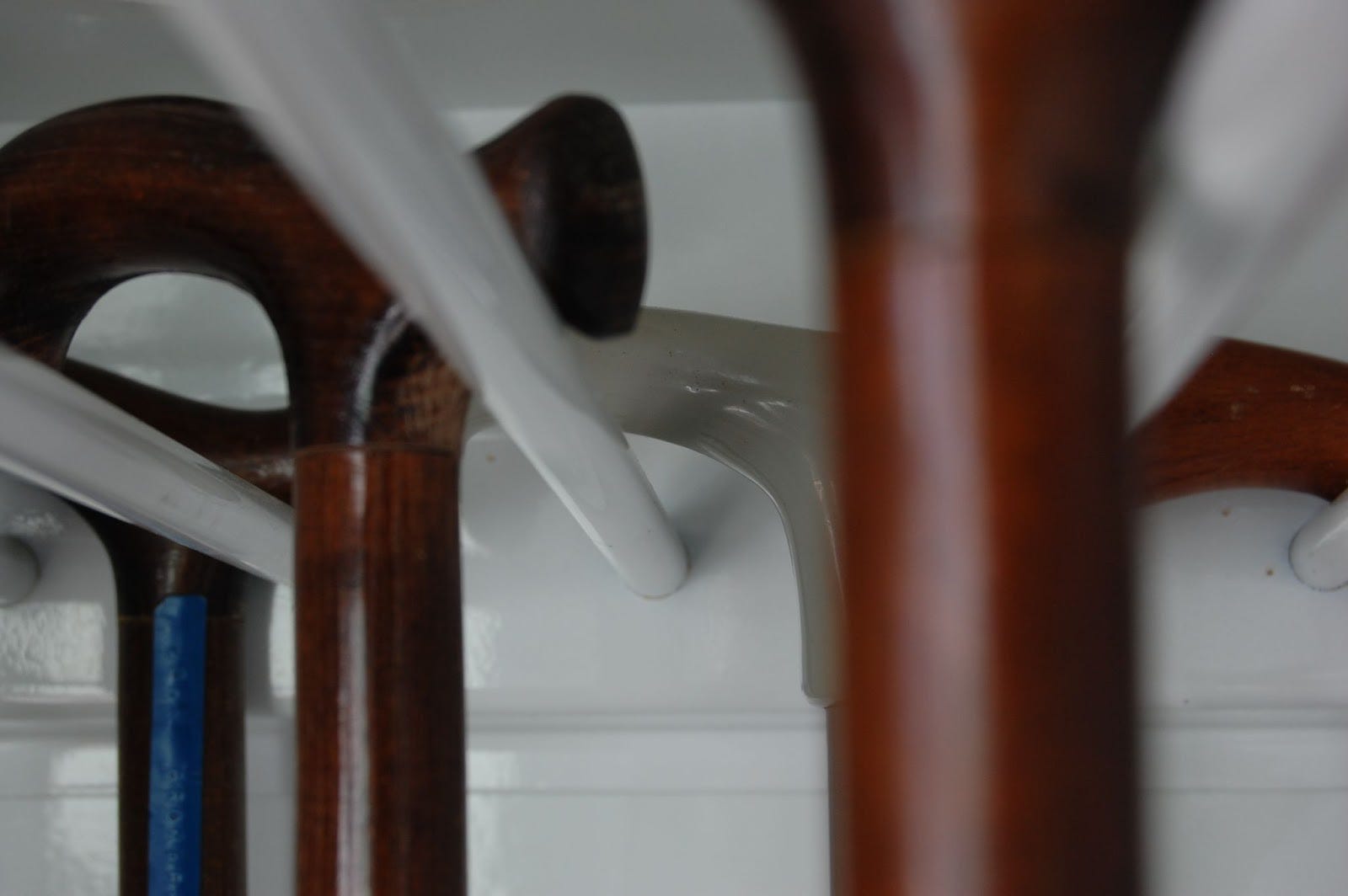
Crutches used at Sätra Brunn. Photo by Gustav Lundin, the image may be reused with the license CC BY. The image can be downloaded from Wikimedia Commons.

Medhavi: – I know exactly what you mean about the increasing gap between regional museums and larger ones, and personally for me, I have been thinking of the role umbrella organizations, and aggregators can play in: a) increasing visibility, b) building participation, c) building connections or dialogue between museums.
Also, your point about hiring skilled staff to meet digital goals makes me think of upskilling existing staff, which is unfortunately still not a mandate at GLAMs in many parts of the world.
Gustav, Brunnsmuseet: - It is striking how well Medhavi and Larissa manage to portray the reality as it looked for museums in general, but also for Brunnsmuseet during the pandemic years 2020 and 2021. It also became a clear starting point for us for a more ambitious digital mediation, not least through our newsletter and our heritage project website, but also our audio guide and our own podcast.
It is also possible to identify with what Larissa describes about large and small cultural heritage institutions, where the large actors with strong resources attract much of the attention, but that the smaller volunteer-led museums can at the same time have certain advantages when they develop their digital ideas and to some extent succeeds better, by being closer to its more niche audience and mission. It is not least a mirror of our work to digitize and publish monographs in adapted e-book formats, which probably would not have been financially feasible at a larger institution, but where we have the advantage of being close to our mission and our audience. After all, there are many museums in the world, but we are still the best in the world at preserving and telling about Sätra Brunn's cultural heritage!
Although the provision of skills, there are points of contact. Brunnsmuseet has also been affected indirectly and directly when temporary projects have not been extended, which has led to canceled collaborations. Closest in memory is the #LandetViByggde campaign from the Swedish National Heritage Board (Riksantikvarieämbetet), where Brunnsmuseet was invited as one of several working life museums to portray a professional profession from its activities, but which ended prematurely when a project employment ended.
It is also important to develop the skills of employees, regardless of whether it is employed or non-profit. As we told you in our newsletter in November (#14) , Brunnsmuseet has started an internal competence development in the form of a study circle in Google Workspace. We hope that this will mean a more efficient internal work process and thus a better end result in what will be seen publicly.
It is important to have strong national and regional actors and organizations that make it possible for knowledge and experience to trickle down to smaller actors. This applies not least to the Swedish National Heritage Board, which since 1 June 2017 has a special task of promoting development and cooperation in the museum area.
In conclusion, the Swedish museums have a bit to improve in terms of building connections and dialogue between each other. There are many advantages in learning from each other, as the museums are strong stakeholders (and thus assets) to each other. Brunnsmuseet, through our membership of the Working Life Museums' Cooperation Council, Arbetsam, has access to a large network of other working life museums which we hope to be able to utilize in a better way in 2022.
***
Original text: 1. Let’s talk about… the role of digital in GLAM in “the new normal”, Medhavi Gandhi & Larissa Borck (CC BY). Adaptation (this piece): What’s the role of digital in the post-pandemic GLAM world?, Medhavi Gandhi, Larissa Borck & Gustav Lundin (CC BY).
 | A guest post by
|